

Large Herbivore Working Group x The Wildlife Trusts
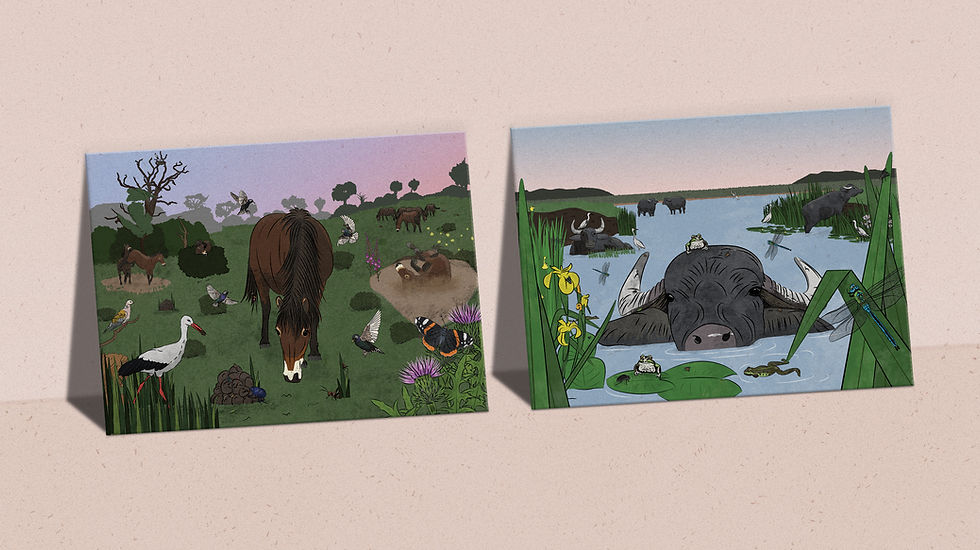


Role: Nature Recovery Creative
Illustration & Information Design
Illustration | Graphic Design | Art Direction | Symbol Design | Information Translation


The Brief
The Large Herbivore Working Group (hosted by The Wildlife Trusts) are doing incredible work exploring how different animals can help restore our landscapes. They needed a way to share the wonderful, complex stories of how these animals behave and the positive impact they have on the environment.
The brief was to produce 11 large herbivore species A4 profiles, including behavioural illustrations of the herbivores and their impact in nature recovery and 40+ behavioural / impact symbols for expert-level conservation engagement.
The guides needed to feel accessible and engaging for professional conservationists, helping them explore the benefits of a wider variety of herbivores and their unique roles in nature recovery.
Find the guides here
www.wildlifetrusts.org

Increased
Readability
Split up heavy text documents into easy to digest chunks, these were punctuated with specially designed symbols to guide the eye through text. By pairing with a symbol information became more memorable and allowed for efficient "skim-reading" of technical behavioural information. Colour and further illustrations were used to maintain interest and connection and helping create an easier read.
Authentic
Connection
I used bespoke illustrations and hand-drawn flourishes to create a personal, field-guide aesthetic. By introducing these human imperfections, the design feels more approachable and relatable, directly increasing the reader’s engagement with the text.


Visualising
Positive Impact
To showcase the vital roles of these species, my illustrations focussed on action. By capturing behaviours like wallowing and debarking, I visualised how they create space for pioneer plants and attract a wealth of birds and insects, providing visual proof of how these animals restore entire UK ecosystems.
Large Herbivore Symbol Library
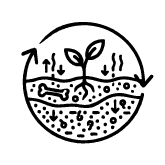
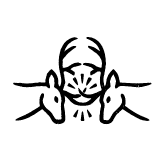
Developed a bespoke collection of symbols as a quick information reference. Each one represents a specific ecological function or important infomation regurding managing them.






Research and Process
Collaborated closely with Rina Quinlan from the Large Herbivore Working Group to ensure every "ecosystem engineer" was scientifically accurate, behaviour was relevant and their impact on biodiversity was clear.

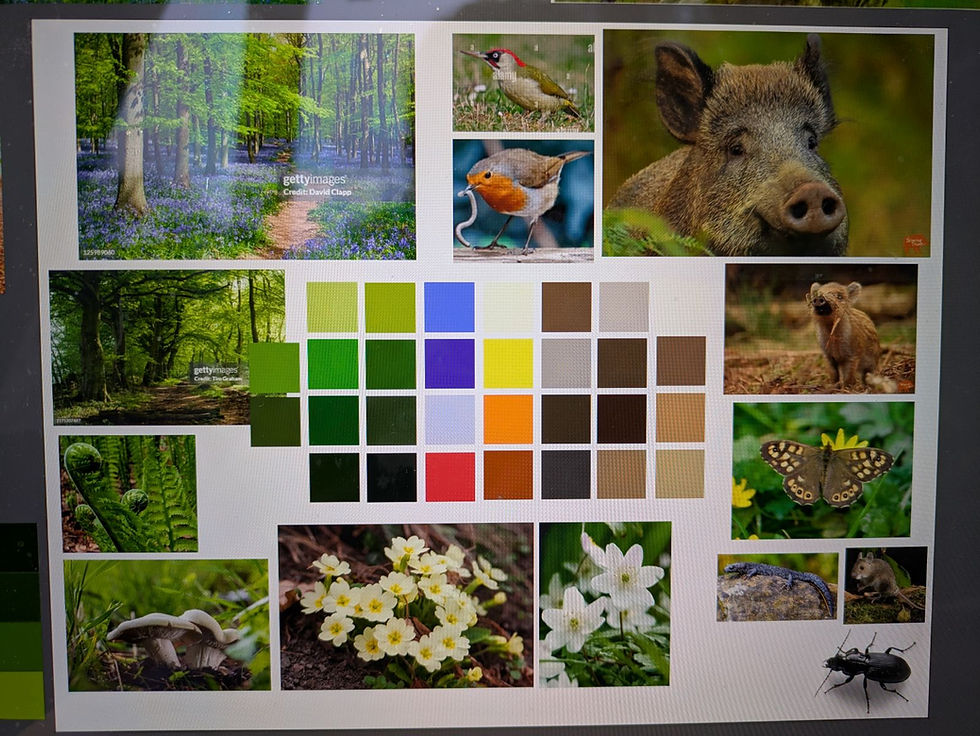

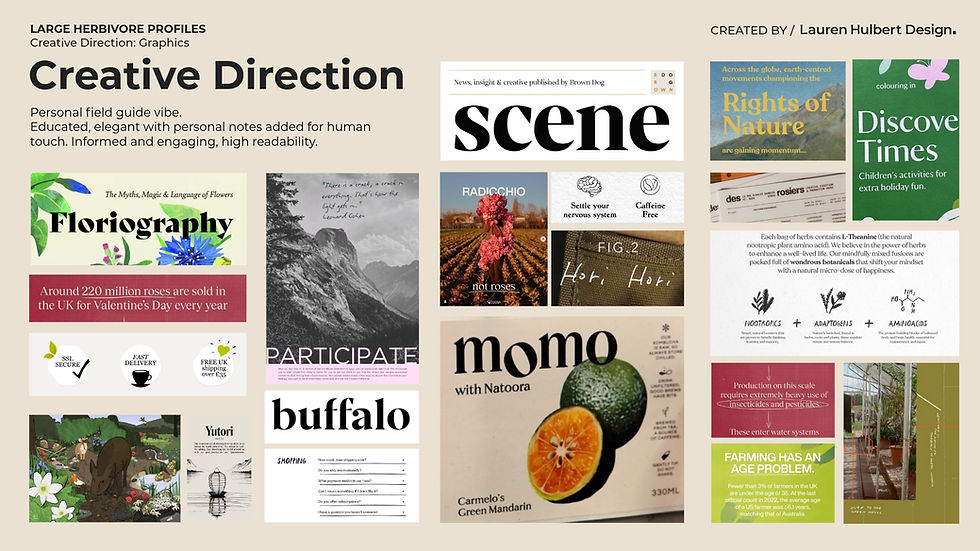
Work Process
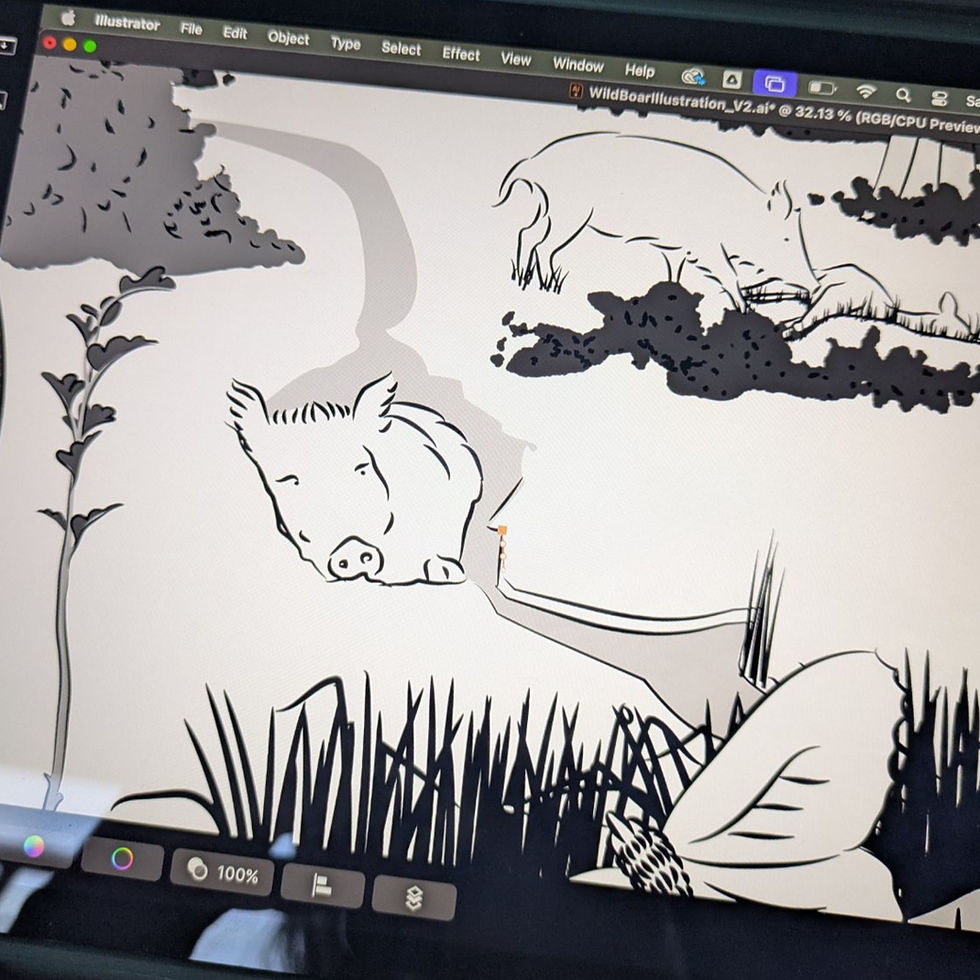
Looked at a variety of different inspiration sources from within the sector and far beyond. Honing colour palettes, typography and vibe from the research I'd gathered from Rina and the group, and the sector, and what felt it would suit the work and organisation.


Rina Quinlan
Founder and Steering Group Member, Large Herbivore Working Group.
"It has been an absolute pleasure to work with Lauren. She has created the most beautiful designs that clearly illustrate how large herbivores influence natural processes. She captured exactly what we were trying to communicate and translated our somewhat complex brief into clear, engaging visuals.
I would highly recommend working with Lauren, not only for the quality of her work, which speaks for itself, but also for her professionalism, insight, and kind, positive approach."


Case Study: An Ecological Framework for Large Herbivore Reintroduction
Brief: Bringing Biodiversity to Life
The Large Herbivore Working Group and the Wildlife Trust required a high-level technical resource to engage the ecological community. The goal was to provide a robust, evidence-based case to ecologists and conservation professionals for the use of large herbivores as functional "landscape engineers."
The challenge was to present a wide variety of herbivores and their specific behaviours in a way that felt academically rigorous yet visually efficient, moving beyond traditional grazing models to a more diverse, functional approach to nature recovery.
The Creative Solution: A Technical Visual Language
-
Specialist Illustrations: I created 11 detailed, illustrations of herbivores proposed for UK rewilding site introductions. Rather than simple portraits, these focused on "Ecosystem Services", visualising specific behavioural traits such as debarking, wallowing, and the creation of mosaic landscapes, as well as showcasing the wider biodiversity gains, to provide visual proof of their ecological impact.
-
The Behavioural Semiotic System (40+ Symbols): To facilitate "professional skim-reading," I developed a specialised library of over 40 symbols. Each icon represents a specific ecological function (e.g., nutrient cycling, habitat disturbance, or seed dispersal), allowing busy professionals to quickly identify and cross-reference the unique benefits of each species.
-
Information Architecture for Experts: I restructured legal and behavioural information into a precise, easy to digest, two-page layouts. By integrating my custom symbols and illustrations directly into the technical text, I turned text-heavy document into "High-Value Prospectus'" that maintain scientific depth while significantly increasing readability.
The Impact: Establishing a Professional Standard
This project serves as a "Professionalisation Tool," providing a clear and sophisticated visual standard for the Working Group’s proposals. By bridging the gap between ecological data and professional decision-making, I have helped provide the "Visual Evidence" required to build confidence in diverse herbivore reintroduction among the UK's leading conservation experts.